
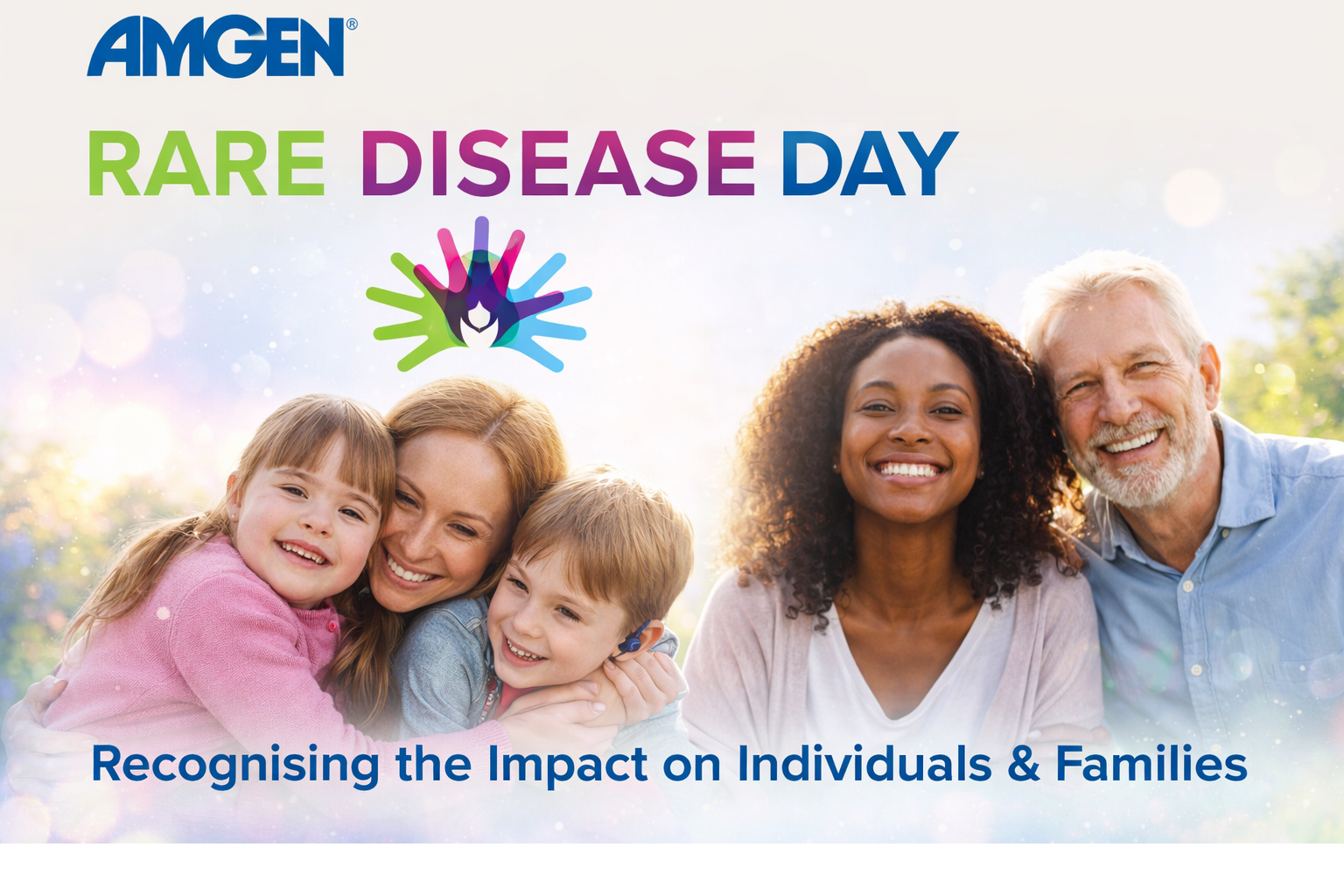
Rare Disease Day 2026: Recognising the Impact on Individuals and Families in Ireland
On Rare Disease Day 2026 (28 February), Amgen Ireland joins the global rare disease community in recognising the individuals, families, clinicians and advocates working to improve outcomes for people living with rare conditions. Rare Disease Day is a globally coordinated movement aimed at raising awareness of the challenges faced by people living with a rare disease and their families, and driving equity in diagnosis, treatment and care. (rareireland.ie)
The Irish Context: Prevalence and Impact
Although each rare disease affects a small number of individuals, their collective impact is significant. Ireland’s National Rare Disease Strategy 2025–2030 estimates that roughly 300,000 people in Ireland are living with a rare disease — a group of conditions that individually are uncommon but collectively affect many people across the country. (rareireland.ie)
Living with a rare disease often involves complex care pathways, delayed or protracted diagnostic journeys, and frequent consultations with multiple specialists. The strategy underscores the importance of improving diagnosis, treatment and care coordination for people with rare diseases and notes that these conditions can place substantial emotional, social and financial burdens on patients and their families. (gov.ie)
Challenges for Patients and Families
For many patients, rare diseases present significant challenges:
- Extended diagnostic journeys: Many rare conditions are difficult to diagnose due to their clinical complexity and low individual prevalence, which can result in long waits for a definitive diagnosis. (Amgen)
- Care coordination: Individuals frequently access multiple specialists and services over time, requiring sustained coordination across healthcare settings. (rareireland.ie)
- Impact on daily life: The medical, emotional and financial implications extend beyond clinical care, affecting education, employment and family dynamics.
Amgen’s Commitment to Rare Disease Impact and Innovation
Addressing serious and complex diseases — including rare diseases — is central to Amgen’s mission to serve patients. Rare diseases are a core and growing part of Amgen’s research focus, reflecting our commitment to high unmet medical need and advancing treatments where options are limited. (Amgen)
Our research and development strategy is rooted in the belief that for every patient there is a solution. Across therapeutic areas including rare disease, Amgen applies advanced biological science to identify and progress potential new therapies and improve existing care options. (Amgen)
Potential Developments with AI and Future Research
Innovation in data science and artificial intelligence (AI) is increasingly part of the future of biomedical research. Amgen invests in AI and computational technologies to accelerate discovery and development of new therapies, enabling the integration of complex data and enhancing our understanding of disease biology. AI has the potential to support earlier identification of therapeutic targets, optimise clinical trial design and contribute to more accelerated advancement of new medicines. (Amgen)
This focus on technology, combined with partnership across the research ecosystem, positions us to contribute meaningfully to shortening the time from research to diagnosis and treatment — an outcome that could meaningfully improve the lives of people living with rare diseases.
Acknowledging Families and Progress
Rare Disease Day 2026 is an opportunity to recognise the lived experiences of individuals and families in Ireland affected by rare conditions, and to reaffirm Amgen’s commitment to scientific innovation, partnership and patient-centred progress. Together with healthcare systems, researchers, patient organisations and policymakers, Amgen is committed to advancing research, supporting healthcare collaboration and contributing to a future where people living with rare diseases have better access to diagnosis, effective treatments and improved quality of life. (Amgen)